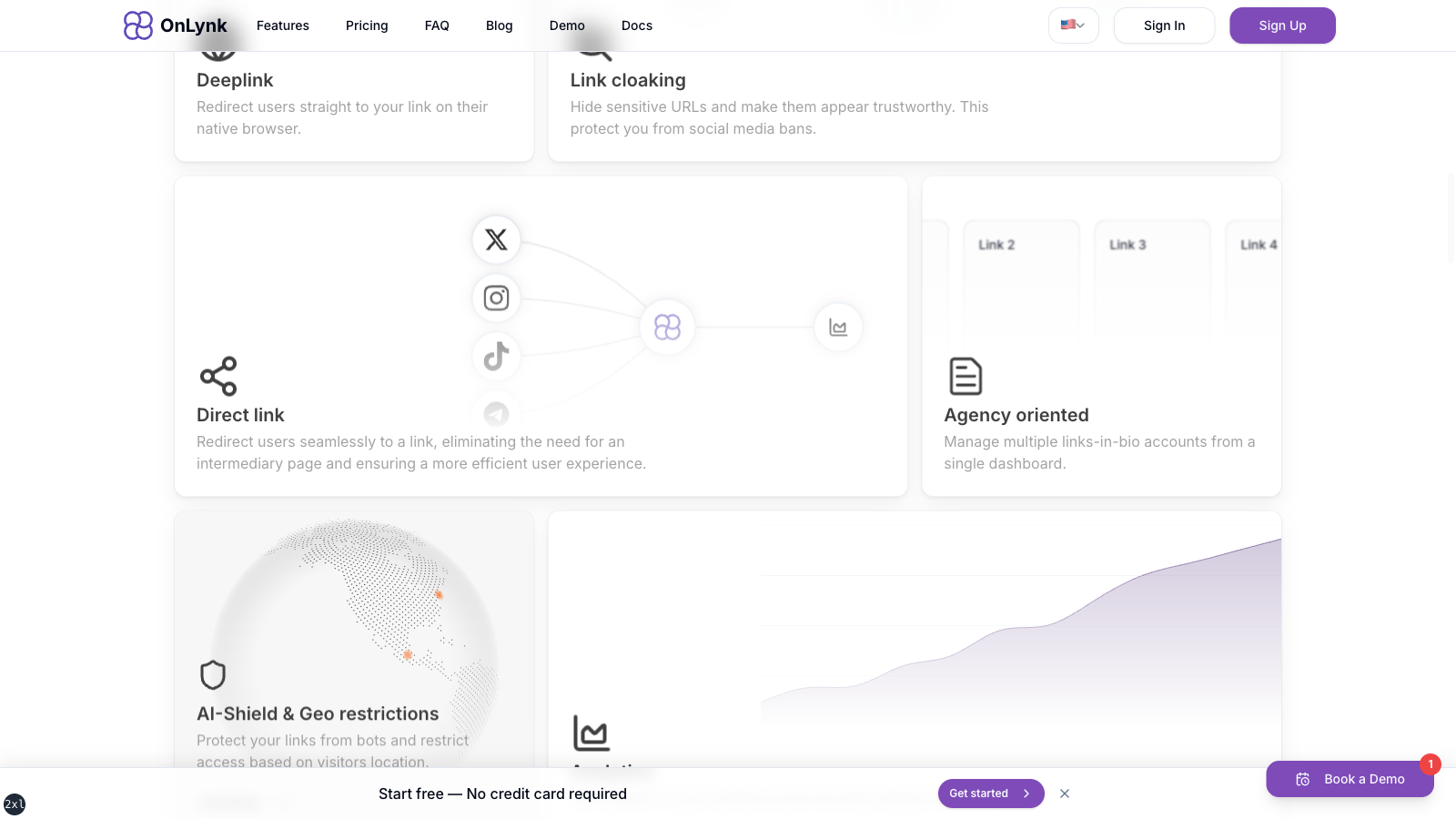
Why it matters: AI Shield influences what bots/crawlers see vs real visitors—especially with Direct link, redirects, and analytics.
AI Shield applies in production on your link pages; layered signals separate automated traffic from real visitors.
## Goals
**AI Shield** helps protect your links from automated traffic and reduces platform risk when sharing—especially if you use **Direct link** or redirects.
## How it works (high level)
AI Shield classifies traffic as “likely automated” vs “likely human”. Exact signals evolve over time, but the result is consistent: bots/crawlers are handled more conservatively.
## What happens next
- **Direct link** — Automated traffic is less likely to be forwarded straight to your destination, so crawlers more often see a safer landing-page experience.
- **Geo-restrictions** — Rules still apply, but automation is handled more conservatively than real visitors.
- **Analytics** — Automated traffic is separated so your numbers stay closer to real human behavior.
> **Note:** AI Shield is continuously updated. Focus on outcomes (safer previews and cleaner analytics), not the underlying signals.
## Related
- **[Direct link](https://docs.onlynk.me/features/direct-link/)** — Why landing pages matter alongside bot handling
- **[Page analytics](https://docs.onlynk.me/page-analytics/)** — Reading dashboard metrics